
Image Source: https://www.redbull.com/mea-en/7-best-vr-games-you-can-play-right-now
VR, or virtual reality, is an experience that immerses the user into a world that can be modified to match the imagination of the application’s developer. The main idea behind the technology that makes virtual reality possible is the formation of illusions that trick the brain into thinking that the digital content the user is faced with is real. For the illusion produced to be effective, the headset displays an image into each eye, each slightly offset from the other. These images, combined with the synchronization between the movement and the headset, create the illusion of a 3d environment. If executed effectively, the brain is tricked into accepting its new surroundings as reality, and the use of elements such as sound contribute to the susceptibility of the brain in falling for this illusion.
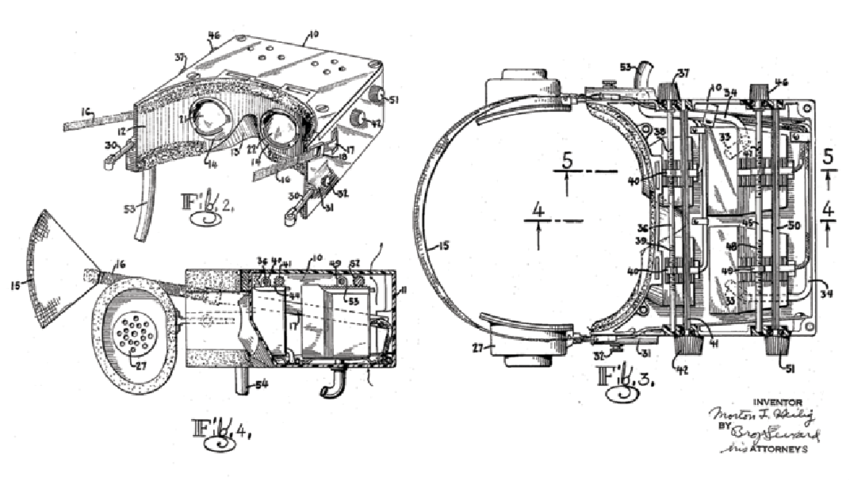
From the Telesphere Mask, the first ever head mounted display (HMD) from 1960, all the way to the novel Oculus Quest 2, VR has made massive strides in becoming mainstream over the years. In 2016, a report authored by Goldman Sachs valued the financial backing of the VR industry to be around 3.5 billion dollars. A major part of this valuation was Facebook’s acquisition of Oculus in 2014, valued at 2.5 billion dollars. Today, the VR industry is valued to be worth around 18.8 billion dollars. Key players in the success of VR have been HTC, Oculus (now Facebook), Sony, Lenovo, and Microsoft, among a few other companies. Because VR is proving to be such a lucrative industry, companies are eager to buy startups and companies centered around the concept of VR/AR. However, this increased interest in the market has created a competition for larger corporations to obtain a monopoly over products such as VR headsets. A prime example of this, recently, Facebook has tried to squeeze rival startups in the VR market to lessen its competition.
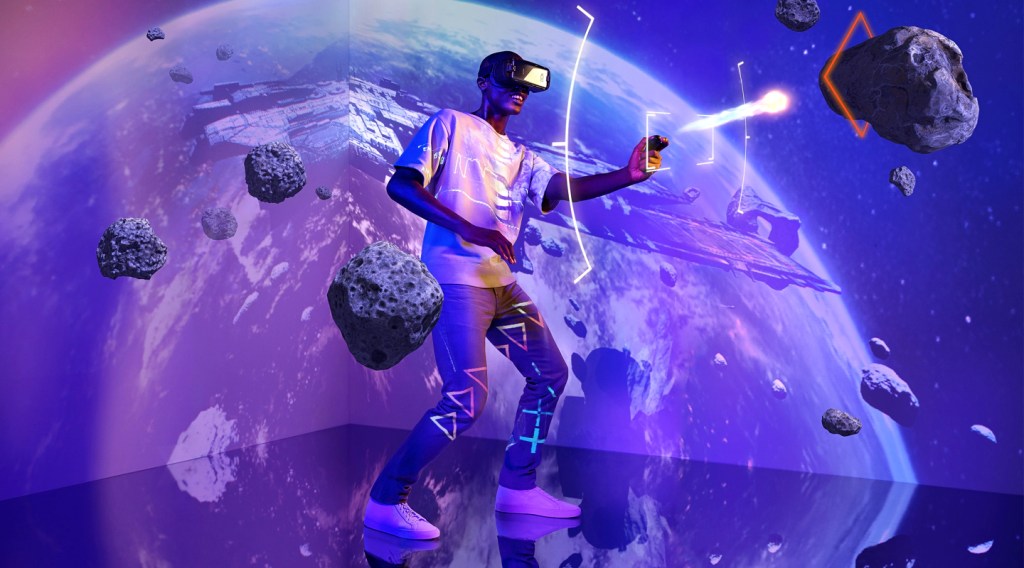
Examples of this hardware include haptic suits, omnidirectional treadmills, and eye/hand tracking. A company named Neosensory developed a haptic jacket that allows you to feel real touch in VR using vibrations. Along with it they developed an SDK so that VR application developers can interface with their technology. Another company called Virtuix started development of an omnidirectional treadmill called the Virtuix Omni in 2013. It will begin shipping mid-2021. The omnidirectional treadmill would be used to allow users to physically walk around in real life to walk within the game. Combined with a haptic suit and a realistic 3d environment, this can create a VR experience similar to that in a sci-fi movie. Additionally, Oculus and Valve have experimented in the past with finger tracking on their controllers. Depending on how you hold your controllers, different fingers will be extended in game. However, recently, with the Oculus Quest 2, hand tracking has been introduced, removing the need for controllers at all. Users can simply have their hands be visible to the Oculus camera, and using artificial intelligence, it will estimate the exact position and gesture of your hands. Using all of these different devices and software, a VR experience could be extremely immersive and similar to real life. VR appears to have a bright future ahead of it.
 flvre
flvre 